
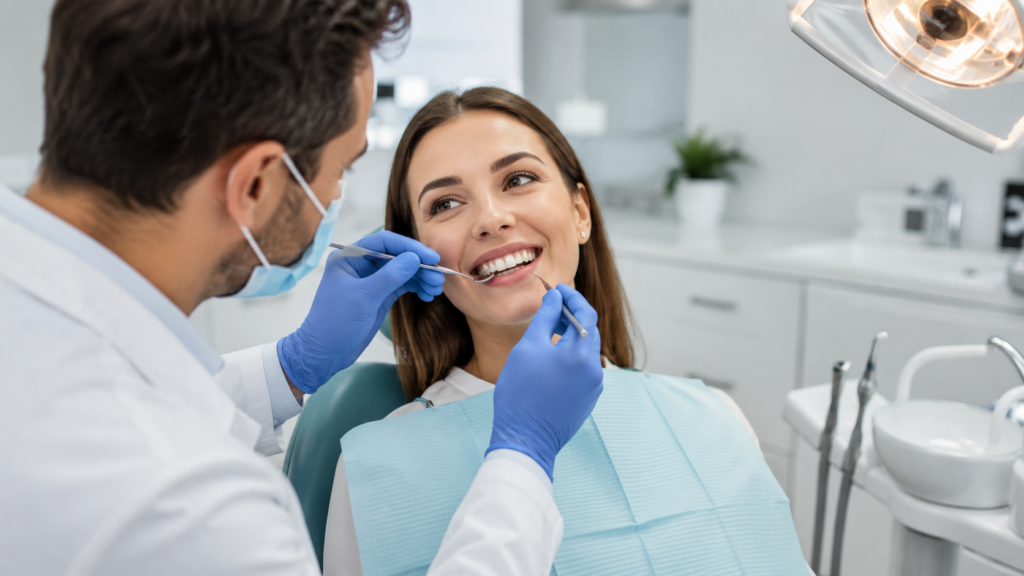
How often should you visit the dentist? “Twice a year” is the answer most Americans have heard for as long as they can remember. It is a useful rule of thumb — but it is not the whole story. The American Dental Association (ADA) does not set one fixed interval for everyone. Instead, it says your visit schedule should match your own risk, and your dentist should be the one to set it. This guide explains what the ADA actually recommends, who needs to go more often than every six months, who can sometimes go less often, what happens at a routine visit, and what you can do at home between visits — including the manual versus electric toothbrush question.
The short answer: every six months for most people
For most healthy adults, the standard recommendation is a dental check-up and cleaning every six months. That is the schedule most dentists recommend, and the one most dental insurance plans in the US are built around — typically covering two cleanings a year. The “2-2-2 rule” that many dental offices use is a handy way to remember the basics: brush twice a day, for two minutes, and see the dentist twice a year. The ADA backs the first two parts of that rule directly. On the third, it is more careful: it says reviews found no single interval that suits everyone, and your schedule should fit your own risk.
Who needs to go more often?
You will usually need visits every three to four months — rather than every six — if any of these apply:
- Gum disease. If you have gingivitis or periodontitis, your dentist will want to monitor it closely and clean below the gum line more often.
- A history of cavities. If you get cavities frequently, your dentist may want to check sooner, apply fluoride more often, or review your diet and brushing.
- Dry mouth. Saliva protects teeth. Medications, medical conditions or treatments that reduce saliva raise the risk of decay.
- Smoking or heavy sugar use. Both raise the risk of gum disease and decay.
- Diabetes. Diabetes and gum disease affect each other, so people with diabetes often need closer dental monitoring.
- Braces or other appliances. Braces trap food and plaque, and you may need to see the dentist more often.
- Pregnancy. Hormonal changes can make gums more sensitive and more likely to bleed, so a cleaning during pregnancy is often recommended.
Ask your dentist why they suggest the interval they do. A good answer names the reason — “your gums bleed in these spots” or “you had two cavities last year” — rather than just “that’s the schedule.”
Who can sometimes go less often?
Some adults with very healthy teeth and gums, no cavities in years, and a good home routine are told they can go once a year. The evidence behind this is mixed. The ADA’s position is that the interval should be set for the individual, not by a fixed rule. Do not stretch the interval on your own without asking your dentist. The point of a check-up is not just the cleaning — it is catching problems while they are small and cheap to fix. A cavity caught at a check-up is a filling. The same cavity found a year later can be a root canal.
What happens at a routine dental visit?
A routine visit in the US usually has four parts:
- Examination. The dentist checks your teeth, gums, tongue and the inside of your mouth, looks for cavities, gum disease and other problems.
- Cleaning. A hygienist removes plaque and tartar — the hardened plaque that brushing cannot remove — polishes your teeth, and may apply fluoride.
- X-rays, when needed. X-rays are not taken at every visit. They are used when the dentist needs to see between teeth, under fillings, or below the gum line.
- Advice and a plan. The dentist tells you what they found, what needs doing, and when to come back.
A routine cleaning without insurance typically costs $80 to $200, or $150 to $400 with an exam and X-rays. Prices vary widely by state and practice, so check with the practice before you book.
What to do at home between visits
The ADA recommends: Brush twice a day for two minutes with a fluoride toothpaste and a soft-bristled brush. Clean between your teeth once a day with floss or an interdental cleaner. Replace your toothbrush every three to four months, or sooner if the bristles are frayed or matted. This applies to electric brush heads too. Replace a brush after an illness such as flu or strep throat. Eat a balanced diet and limit sugary drinks and between-meal snacks.
Manual or electric toothbrush: does it matter?
The ADA says both manual and powered toothbrushes can be used effectively, so the choice is partly about cost and preference. Electric brushes are generally more efficient at controlling plaque in studies, because the brush does the movement for you and many models have a timer that helps you brush for the full two minutes. Electric brushes help people who struggle with a manual brush — for example, people with arthritis, limited dexterity, or braces. Manual brushes are cheaper, simpler and easier to travel with. A good manual brush, used for two minutes twice a day with the right technique, is perfectly effective. The replacement rule is the same: every three to four months for the brush or the head. Do not buy an electric brush expecting it to replace flossing or dental visits.
How to keep the cost down
- Use your insurance fully. Most plans cover two cleanings and exams a year. Book them.
- Ask about the price before you book.
- Consider a dental school clinic. Dental schools offer cleanings and treatment at lower prices, carried out by students under supervision.
- Do not skip a visit to save money. A skipped cleaning is rarely a saving — it is usually a more expensive problem found later.
A simple schedule to follow
- Every day: brush twice for two minutes with fluoride toothpaste; clean between teeth once.
- Every three to four months: replace your toothbrush or electric brush head.
- Every six months: dental check-up and cleaning, unless your dentist has set a different interval for you.
- Every visit: ask your dentist why that interval is right for you.
- Straight away: book an appointment if you have pain, swelling, bleeding that does not stop, a broken tooth, or a filling that has come out.
The bottom line
For most healthy adults in the US, every six months is the right interval for a dental check-up and cleaning. But the ADA is clear that there is no single interval for everyone — your dentist should set yours based on your gums, your cavity history and your risk factors. If you have gum disease, frequent cavities, dry mouth or braces, expect to go more often. Whatever the interval, the home routine matters just as much: two minutes, twice a day, fluoride toothpaste, cleaning between teeth daily, and a fresh brush every three to four months.
Disclaimer: This article is general health information for the US in 2026, not medical or dental advice. It does not replace advice from your own dentist. If you have pain, swelling or a dental emergency, contact a dentist promptly.
Sources: American Dental Association (ADA) MouthHealthy and ADA Oral Health Topics: Toothbrushes (updated August 2026); Cleveland Clinic / ADA guidance via VV Dental; University of California, Berkeley “Brush Up on Prevention” (MetLife / ADA); Family Dental of Connecticut (updated October 2026). Sources checked 20 November 2026.